Everyone Came Eventually — A 70s Seoul Holiday and Proof That Love Looks Different in Every Family.
During the 1970s in Korea — yes, even with that unforgettable wallpaper — holidays began weeks in advance. The floors were warm, the house was spotless, and the smell of food lived in every corner. This is how holidays began in my family back then: always calm at first.
Everyone spoke politely, gently, almost ceremonially, talking about how well their children were doing, how things were going, how everything was fine. The performance of harmony came before the meal.
And always:
Eat more. Eat more, please. Eat more.
Food never ran out. That wasn’t about hunger. That was love.
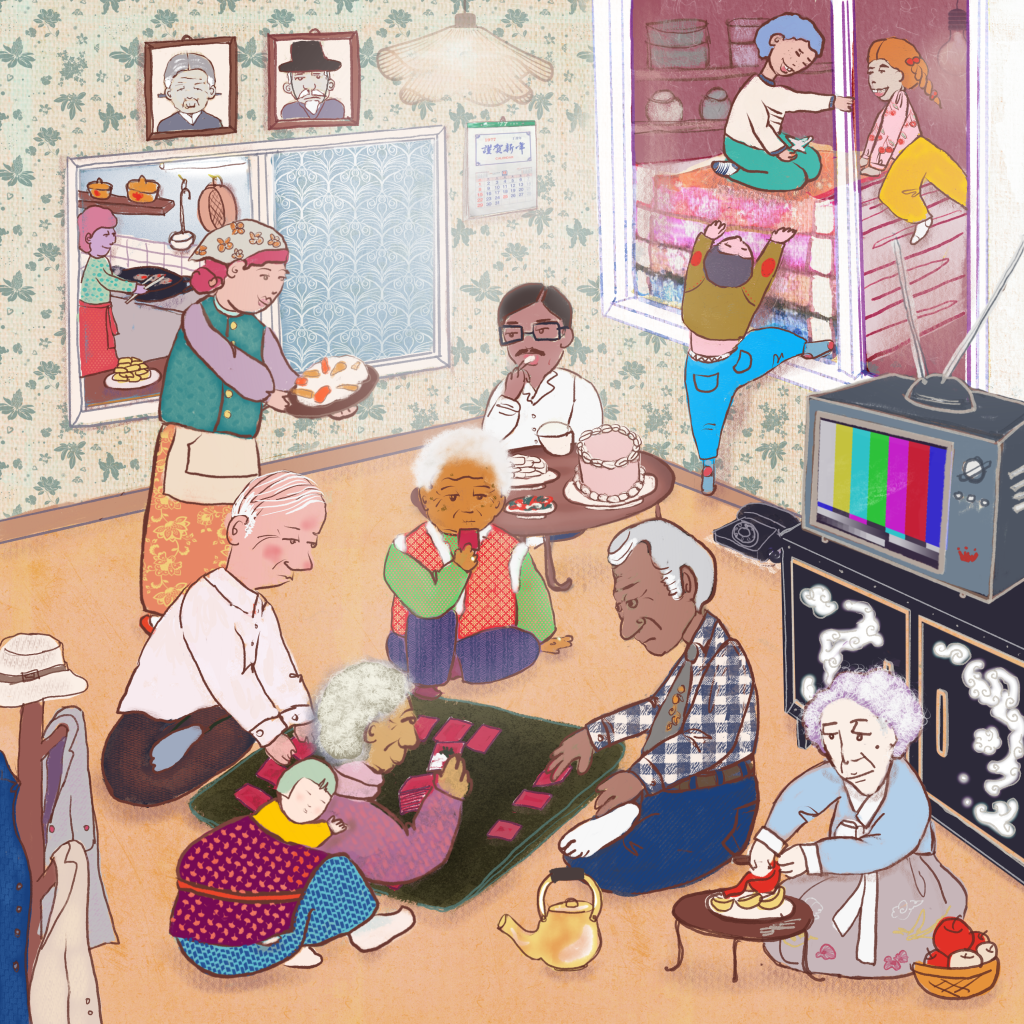
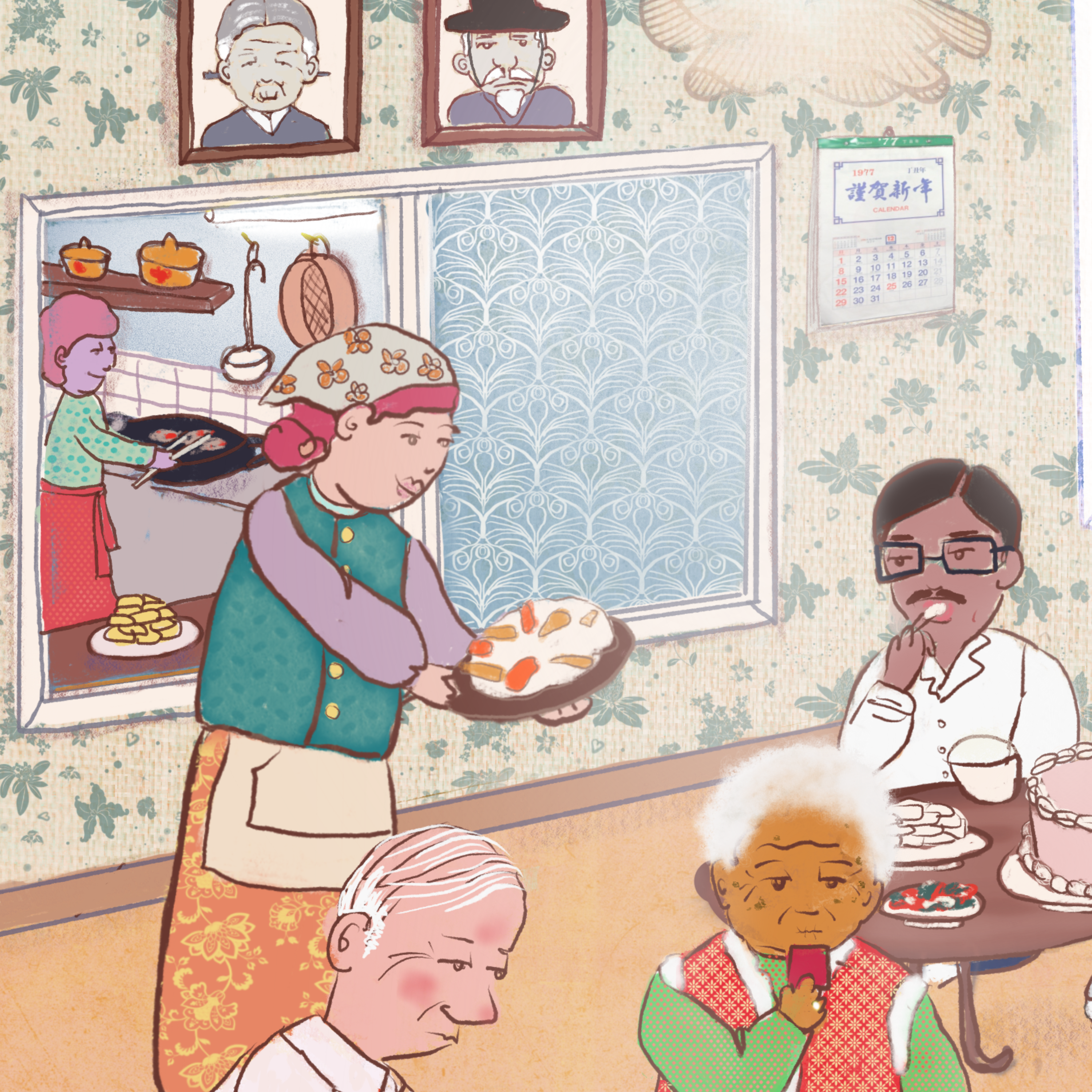
All the young women, including my mother, would end up sick afterward — a full week of exhaustion. But that was tradition. My grandmother’s generation did it. Her mother’s generation did it. One after another, the ritual continued: more food, more preparation, more giving.
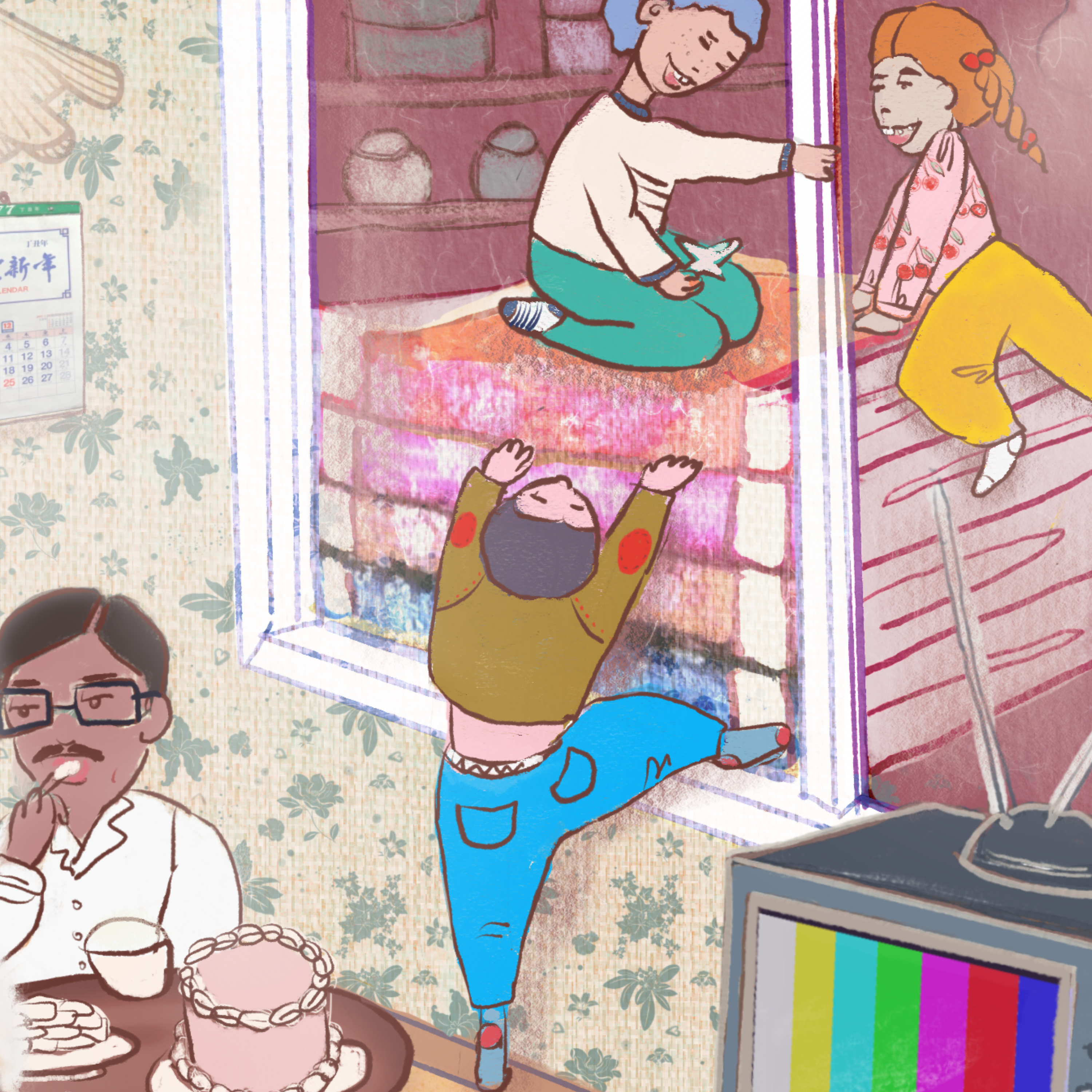
Meanwhile, the children roamed free. Child safety? That wasn’t the headline of the day. Somewhere there was always a thump, a crack, a sudden cry, followed by a younger adult checking briefly and announcing:
“Everything’s fine.”
Bruises were normal. Bumps were normal. Even the occasional chipped tooth was considered part of childhood. Unless there was real blood, no one ran to an emergency room. Life simply continued.
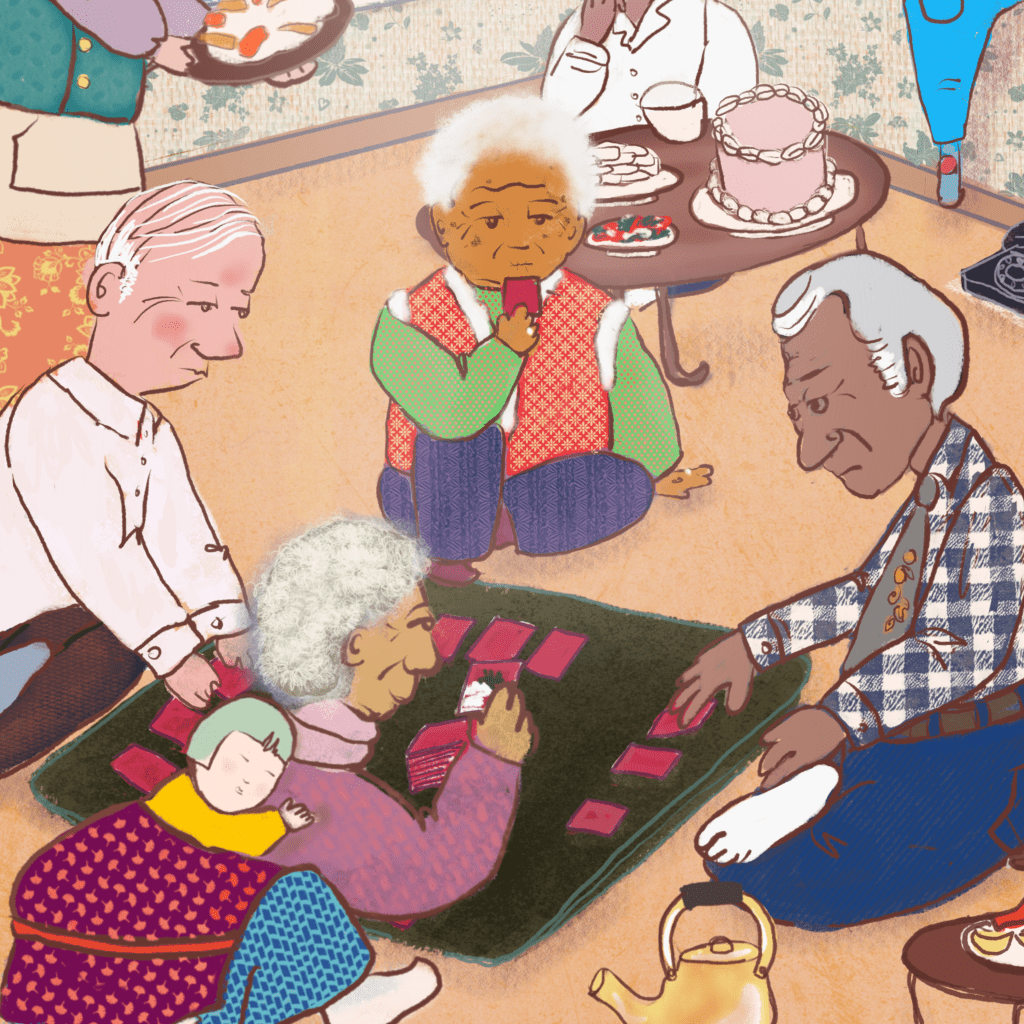
And always, the game table grew quieter.
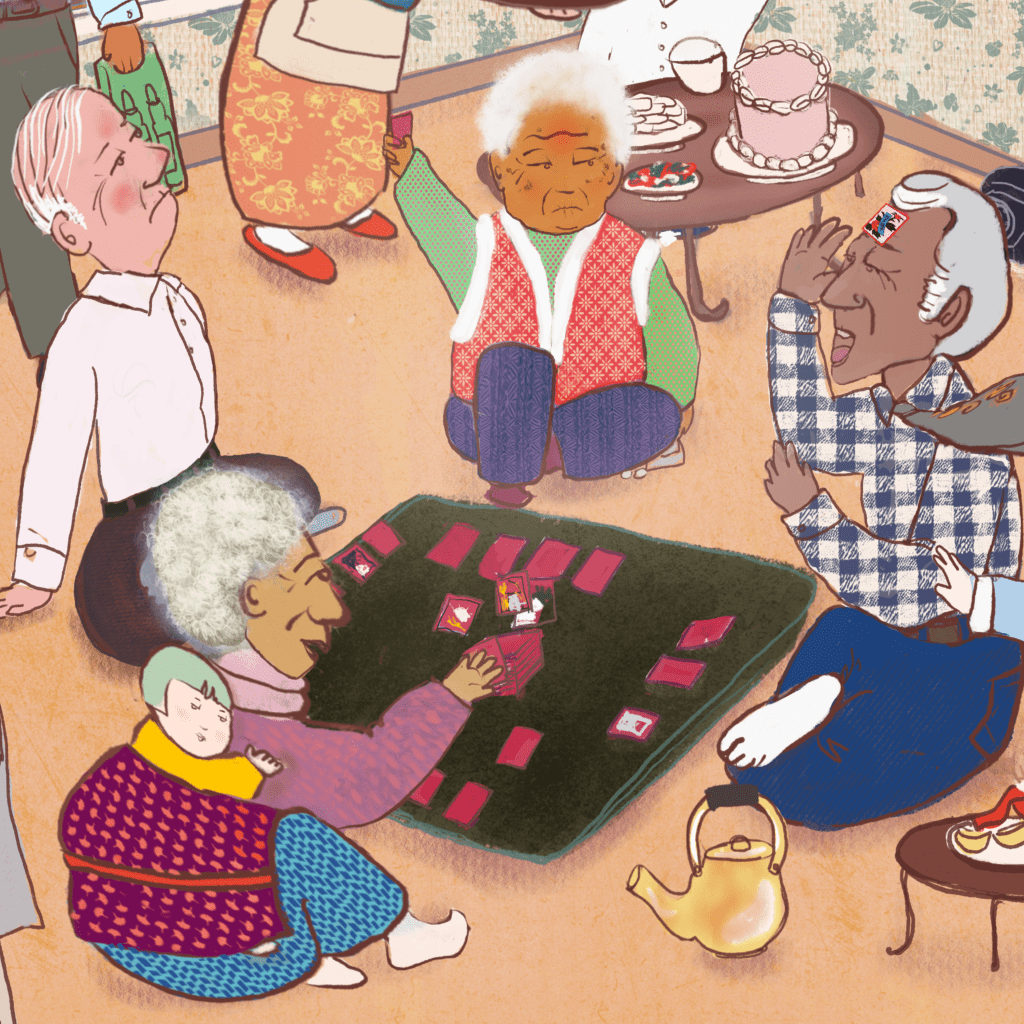
Because once the Hwatu cards came out, conversation faded. Eyes lowered. Pride sharpened.
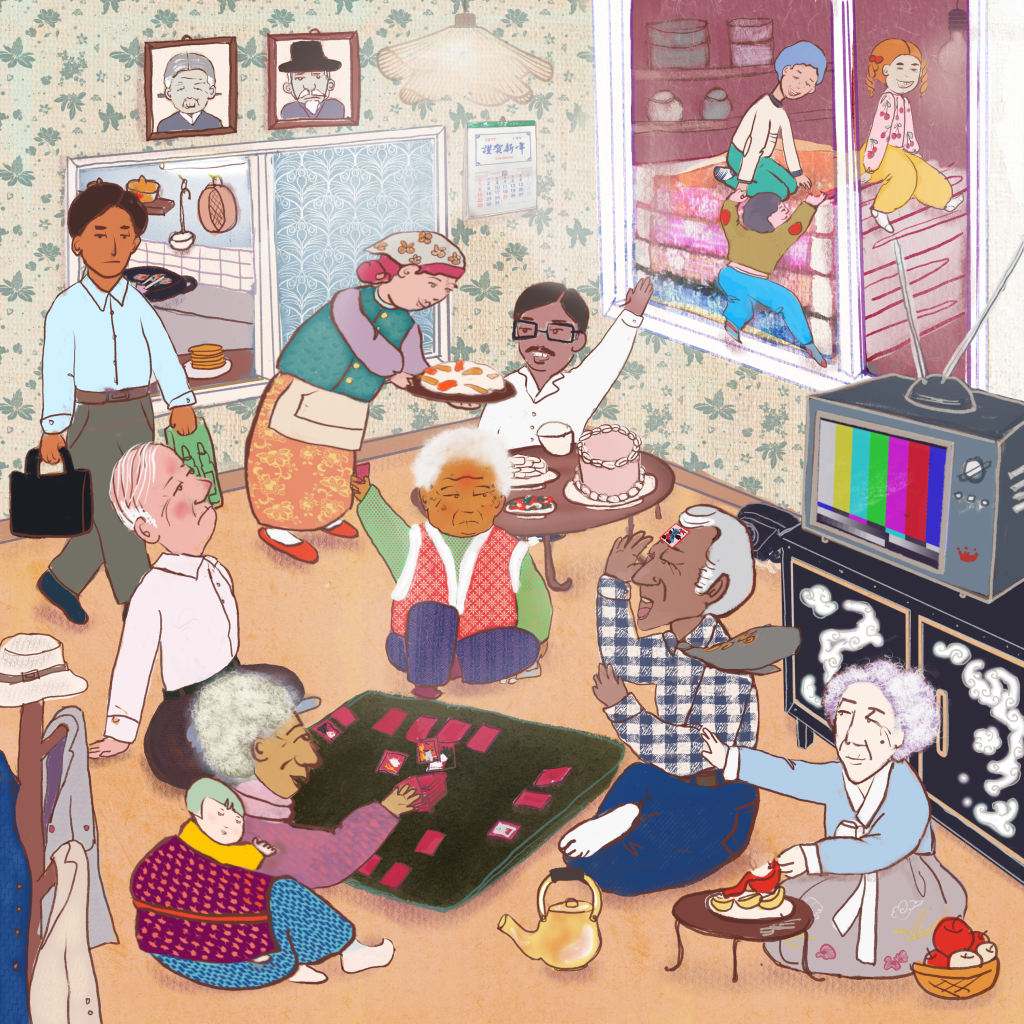
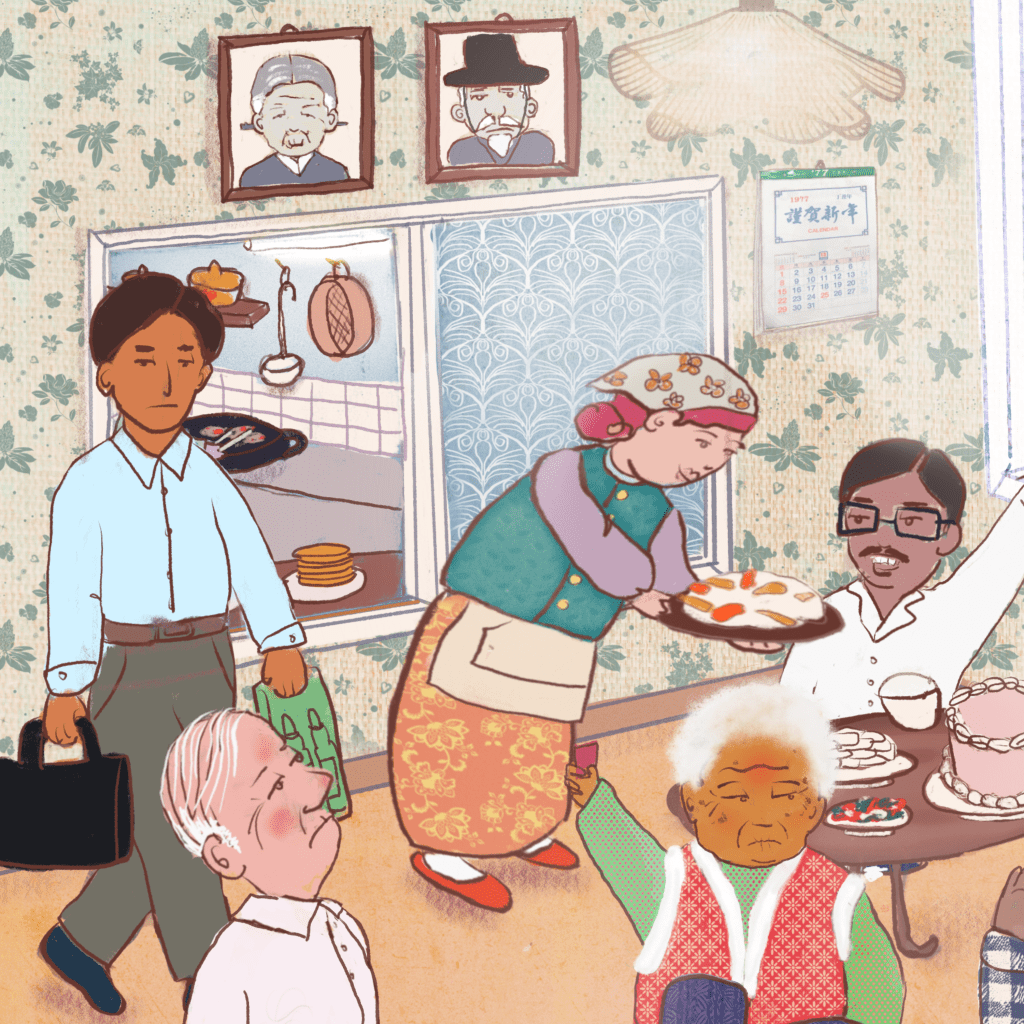
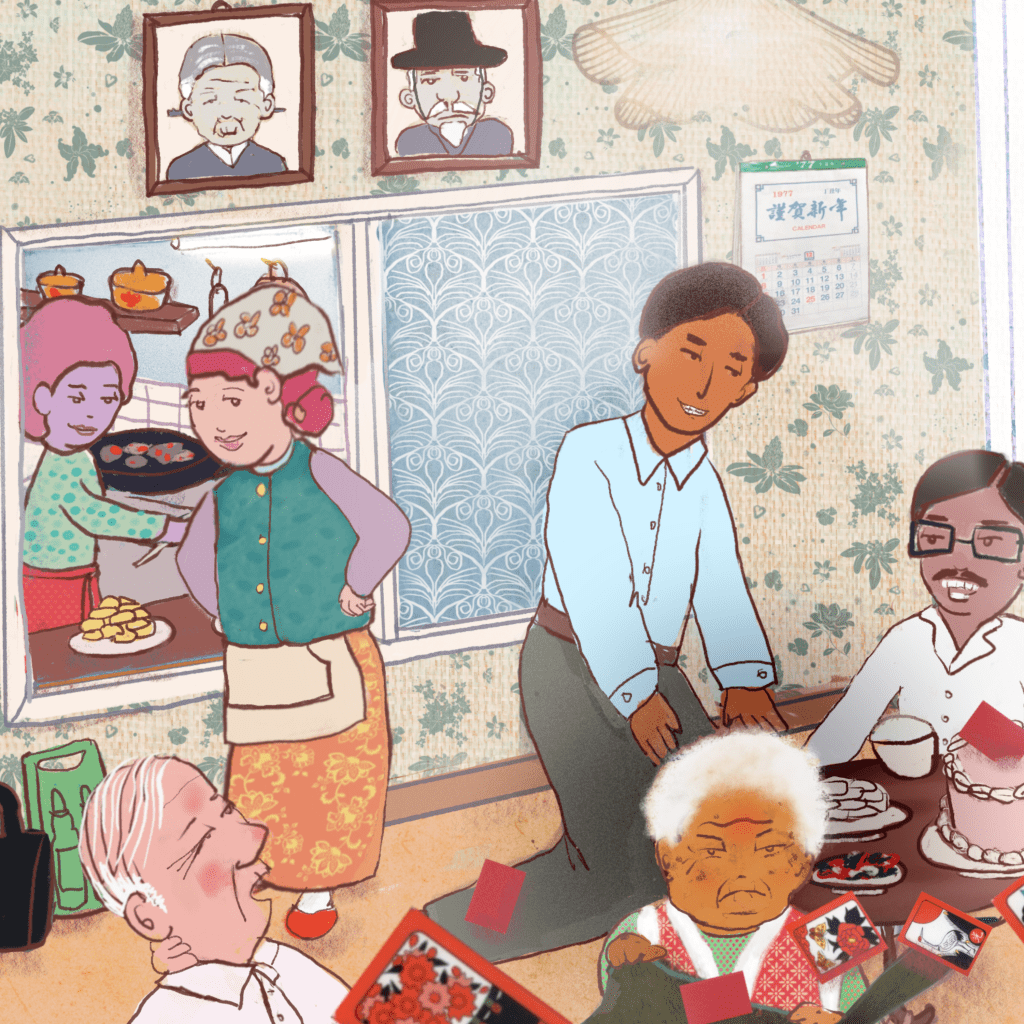
Then the graduate-student uncle would arrive, carrying a completely unnecessary black suitcase and a boxed holiday gift set — sesame oil, of course. During holidays, those boxed sets filled every store. The packaging itself was the wrapping. The price was doubled, naturally, and somehow the price mattered, because it quietly measured how much someone cared.
He was probably given the money that morning with instructions:
Don’t show up empty-handed.
Meanwhile, cousins who arrived early were already eating from the “before-dinner feast,” because in those houses there was always a meal before the meal before the meal.
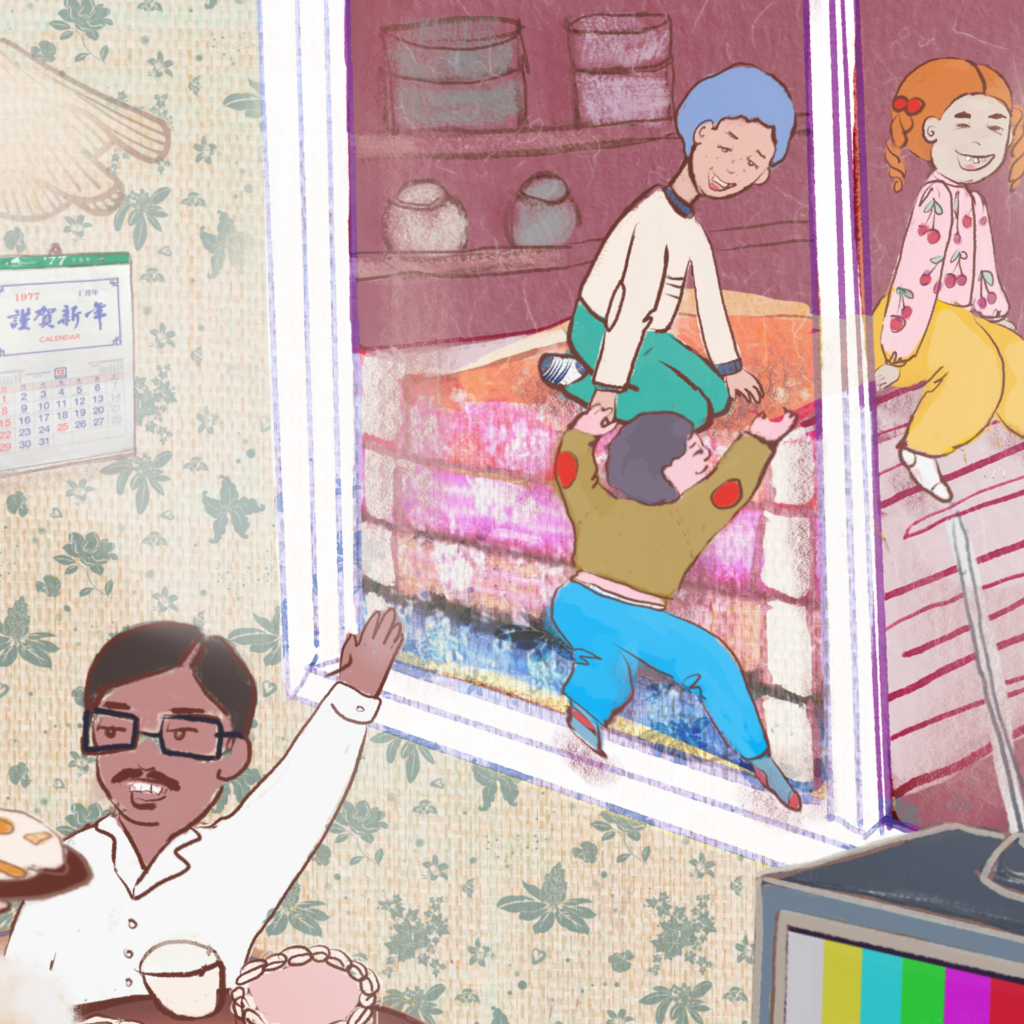
And still the children climbed their wobbling futon towers, shouting stories:
“I’m the pilot!”
“I’m sailing!”
“Grab me! I’ll save you!”
No one stopped them.
They were having too much fun.
And then it happens.
A sound. A shift. Someone has drawn a very good hand.
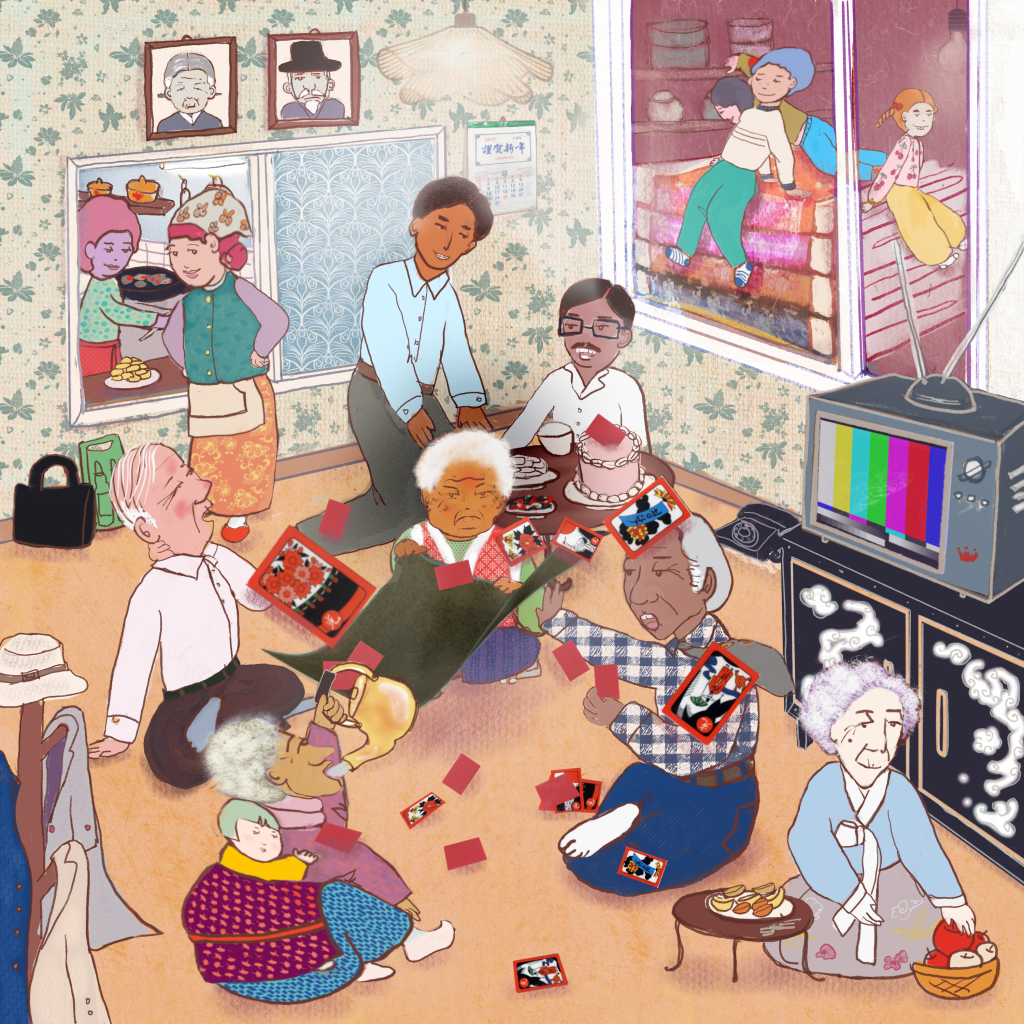
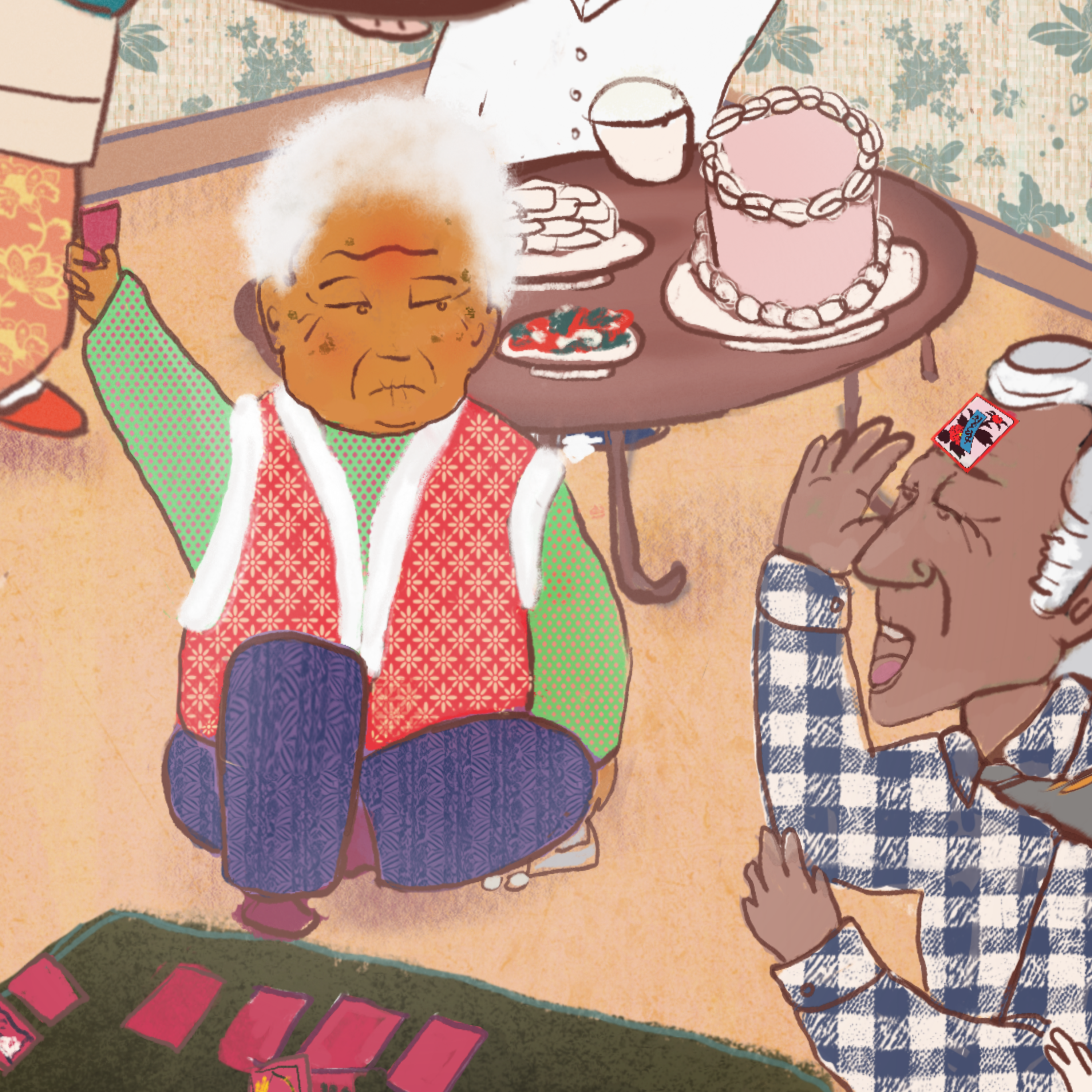
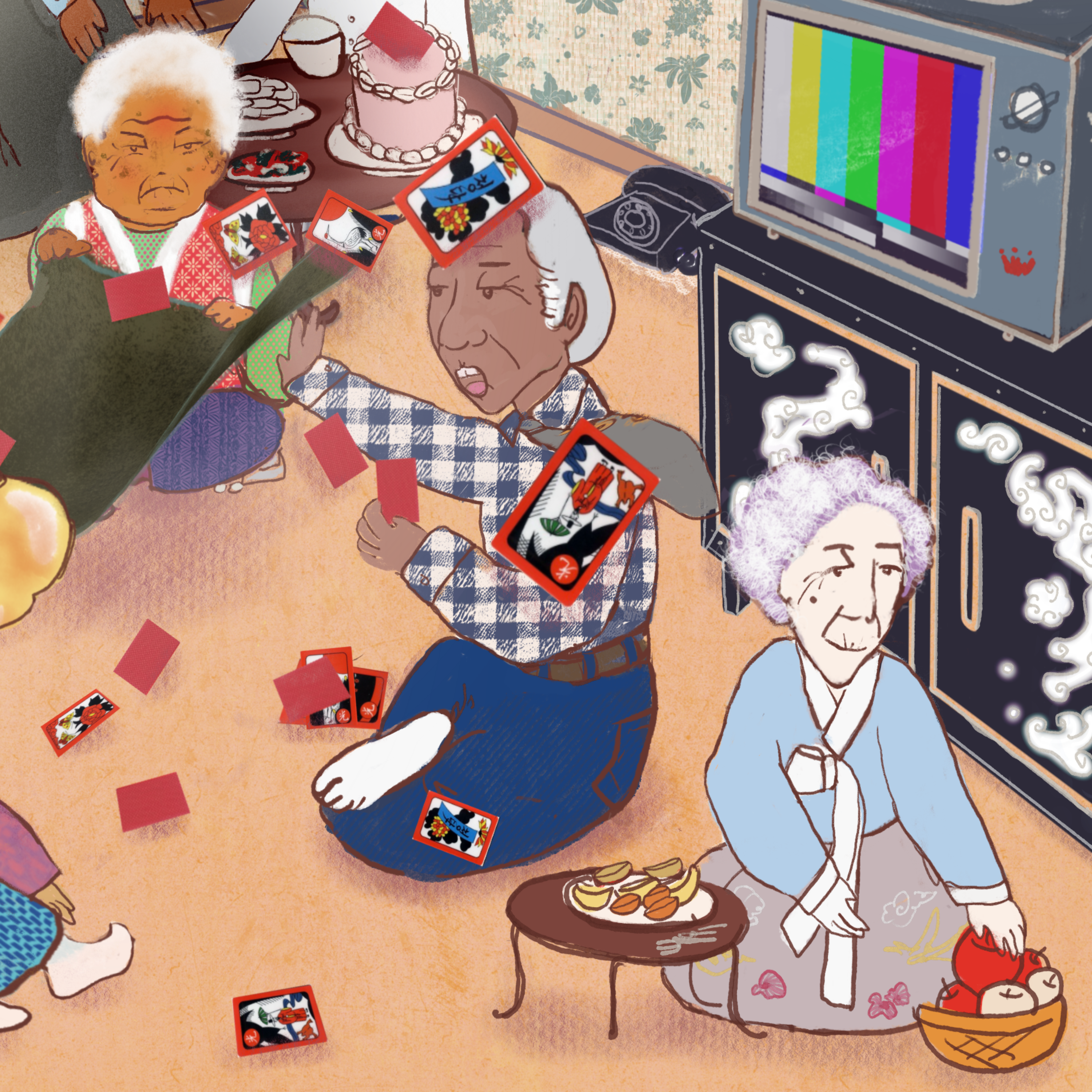
My grandmother’s younger brother — proud, triumphant — places a card on his forehead to show it off. That’s the moment. The exact moment. Everyone knows what he has just done.
Because this was never really about the game. The money on the table was worth less than ten dollars today. That wasn’t the currency. Pride was.
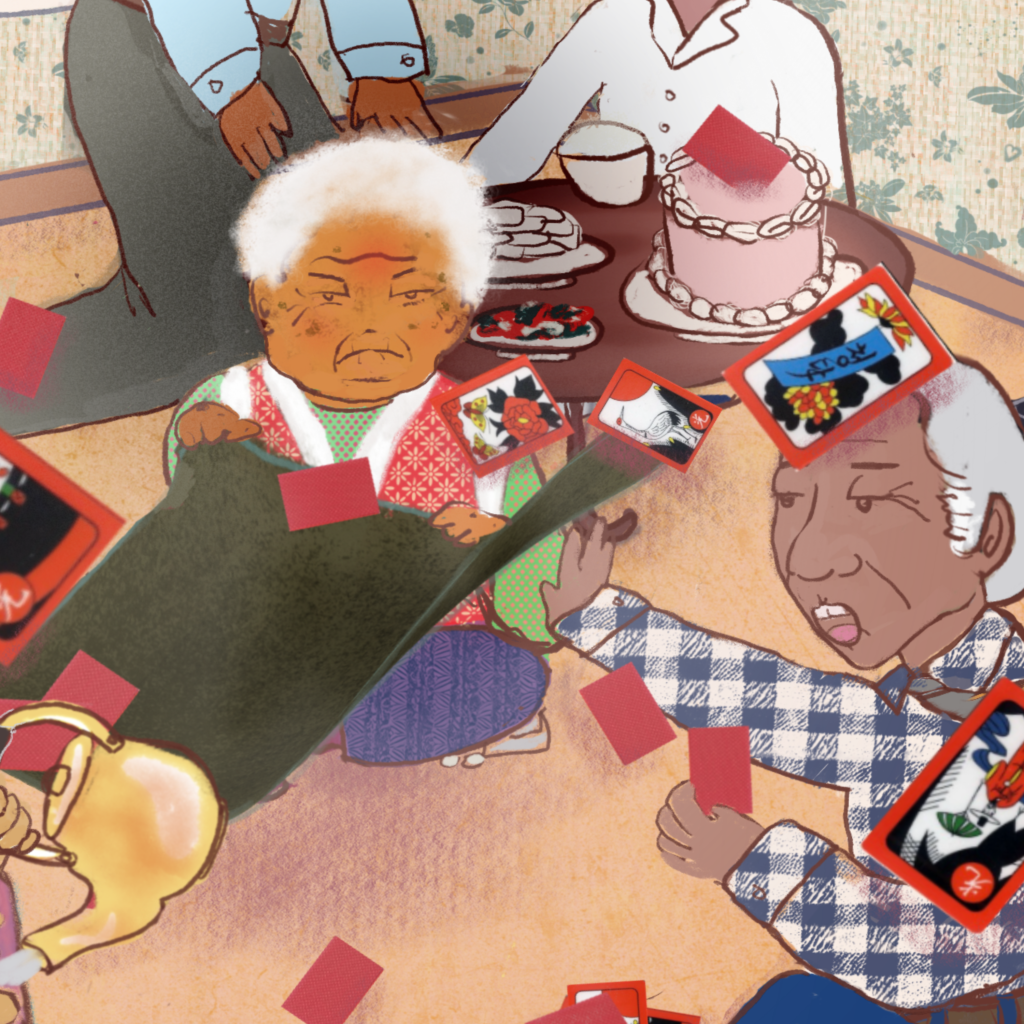
My grandmother, the eldest sister who helped raise her siblings, who paid tuition, who carried responsibilities no one asked her to carry — she sees it. And suddenly the room changes temperature.
It isn’t about Hwatu anymore.
Old stories rise. Stories from the North. Stories from the town they left behind. Stories about sacrifice, debt, memory, loyalty. Things that have nothing to do with cards — and everything to do with history.
Voices sharpen. Someone brings up something that shouldn’t be said in front of the younger ones. But this is the opening she needed.
And then—
She flips the blanket.
Proudly. Completely. Traditionally.
That’s it. The ceremony is complete.
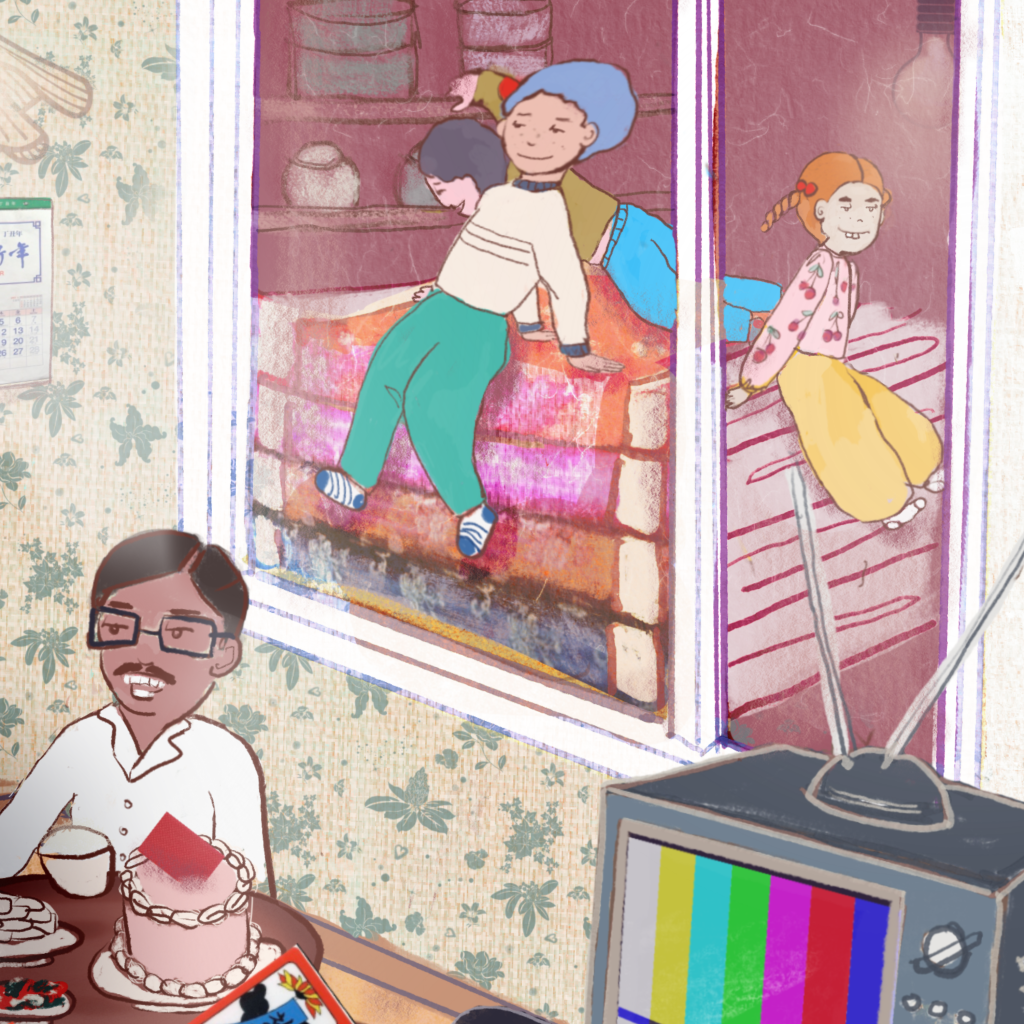
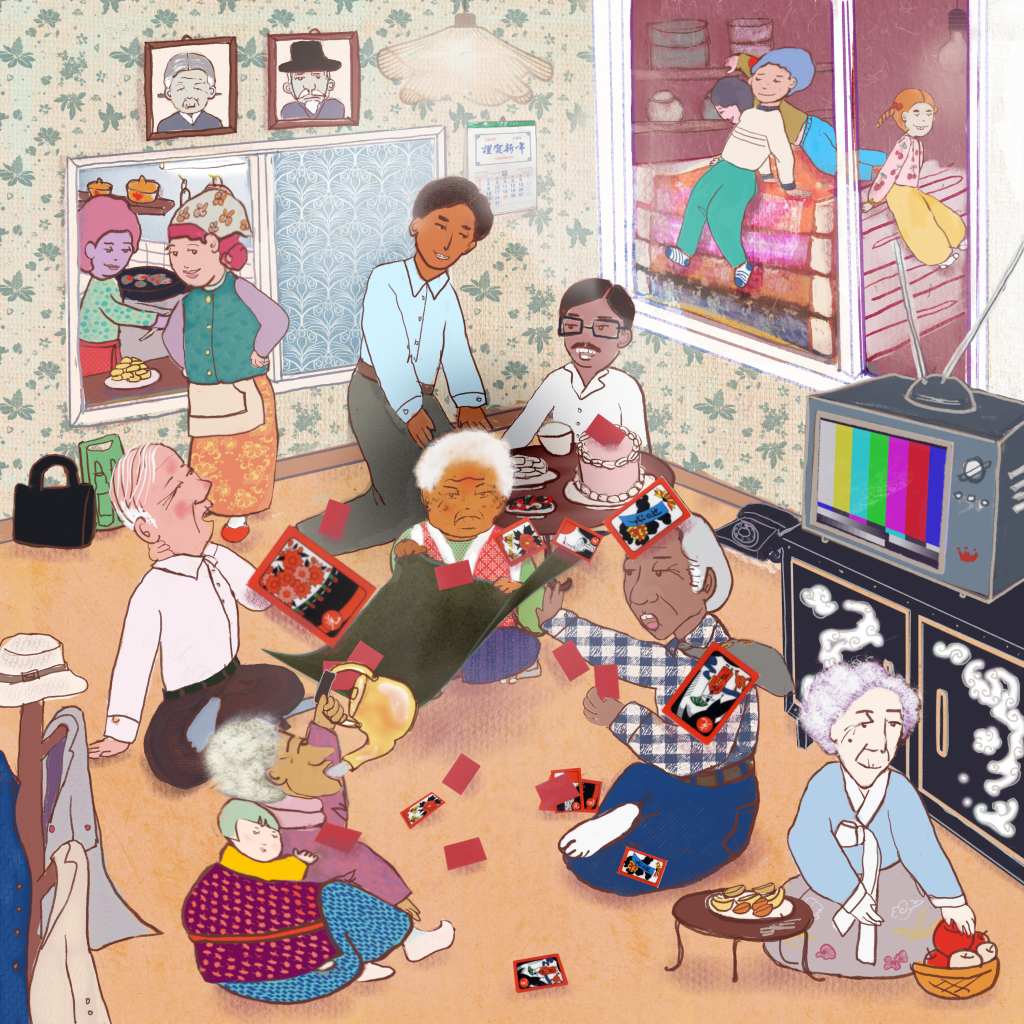
Meanwhile, the children are still playing, still leaping from futon towers, still rescuing imaginary sailors and chasing invisible villains. In our private storyline, she might even have been the villain. But that was part of the fun.
Around the room, conversations continue as if nothing happened. Cousins talk about careers, overseas training, business trips to Japan, the gifts they might bring back. It sounds casual, but everyone knows it’s a quiet kind of showing off. The younger women say nothing. They keep cooking, keep serving, eyes speaking silently to one another.
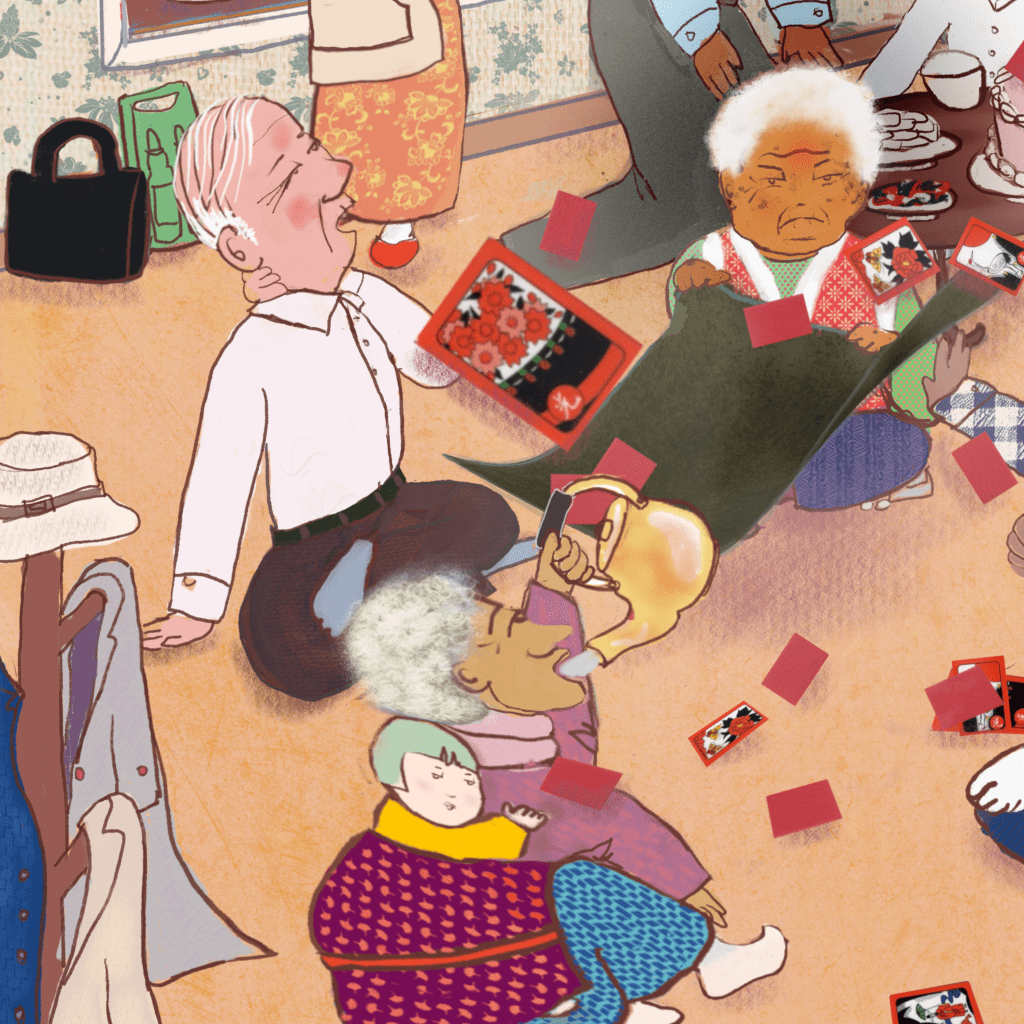
The official reactions belong only to the card players — the elders. A hand grabs the back of a neck. Someone gulps water straight from a metal pot. Dramatic responses only. Laughter is not allowed. Serious reactions are required. That is the rule.
Because without the proper reaction, her performance has no meaning.
And about thirty minutes later, the real feast begins.
Someone sings.
Metal chopsticks tap the table like drums.
A little alcohol appears.
Voices rise.
Happy holiday.
Happy New Year from my painted family to yours.
In the end, every story becomes a room we can still walk back into.
 LALATOWN LIFE
Leave a comment